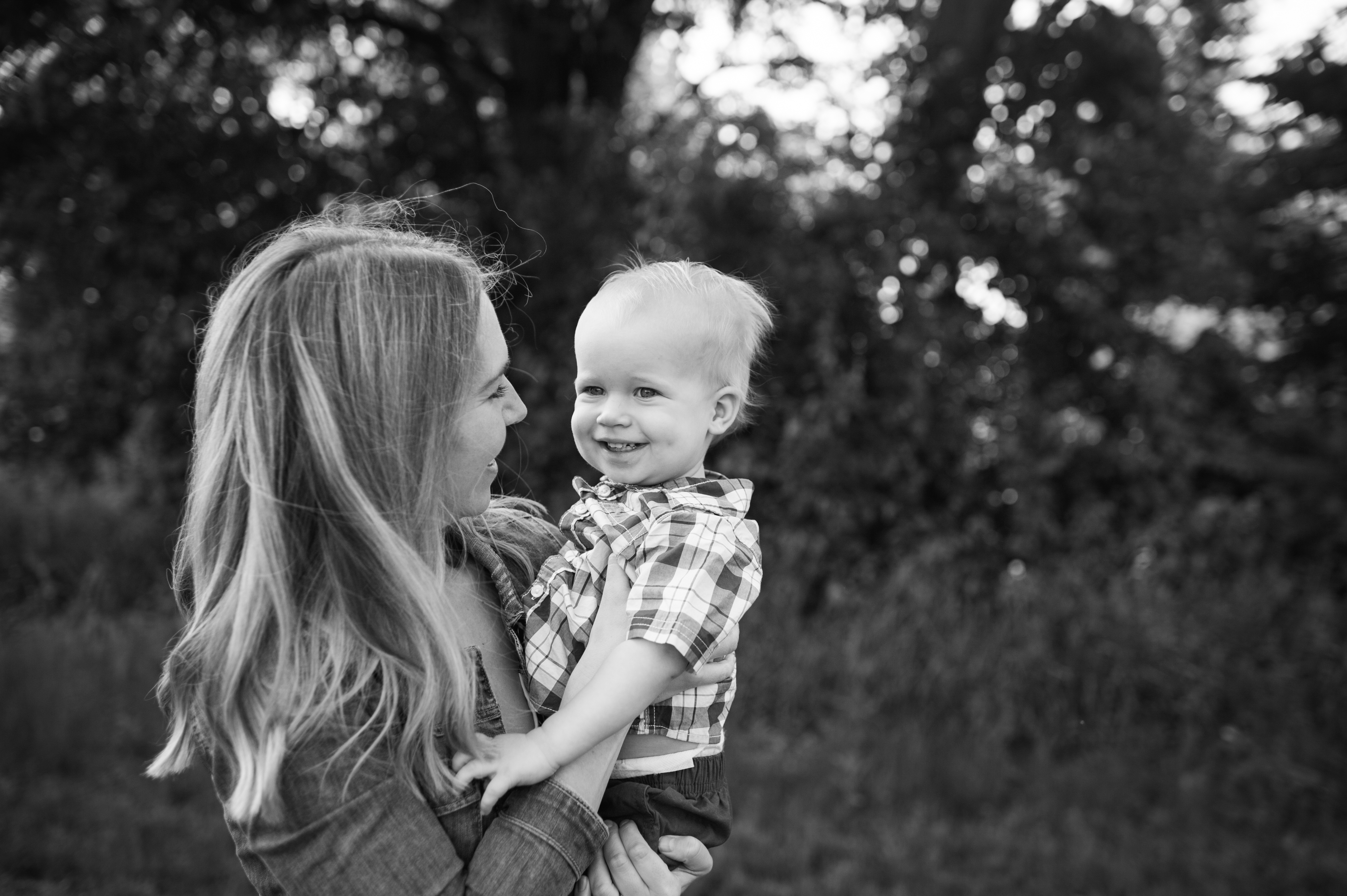
This year, I want to be brave

“Are you sure you’re ready for this?” he asked, looking at me in the mirror.

From height of my salon chair, I studied myself. Some iteration of long hair has been my look the majority of my adult life. My senior year of college I received a poorly executed shorter cut that left me emotionally scarred. It was almost as embarrassing as four-year-old me’s infamous bowl cut. I’d vowed to never go short again.

For months my stylist urged me to try a “lob”—I resisted. Now it was the middle of December, my birthday and Christmas looming. Yet I found myself longing to speed up the clock and turn the calendar to a fresh year. I needed to put the last year behind me. I craved change the way a desert wanderer craves water. I was thirsty for it.

“Oh yes. Let’s chop it.” I answered confidently. “This year, I want to be brave.”

I love the energy of a new year. There’s something about switching out my calendars and starting fresh that inspires hope and optimism in me. I love seeing others set new challenges and attainable goals for themselves. I even love the idea of resolutions, though personally, I don’t set them. I haven’t for years.

Instead each December my practice is to select an intention—a word or phrase on which to focus in the coming year. A new year’s intention is both a catalyst for change and slow burning theme that seeps into your dreams, eventually spilling over into real life and disrupting old patterns of being.

Last year my intention was “create and connect.” I hoped to build relationships with my network by continuing this blog. Though I work full-time at a faith-based magazine, I dreamed of expanding my horizons—exploring other topics and reaching new readers—via freelance writing. Most of all, I wanted to publish more stories and connect with others.

In early 2018 especially I wrestled with self-doubt and rejection. Rejection is common in publishing, but when you’re just starting out it can feel deflating. Amid a sea of unreturned pitch emails, I held tightly to the wisdom of established authors who’ve repeated this seemingly simple advice: if you want to be a writer, write. Easier said than done.

For me, writing is both a passion and an act of courage. When I write, I have to tune out my inner mean girl who claims my story isn’t interesting or helpful or original—and listen to my sure, strong voice. Anchored by my 2018 intention, I pushed past fear and pecked away on my laptop anyway. While I did, a funny thing happened: The more I wrote, the less I heard my inner critic. Because of this, I spent the last year immersed in creativity and connection. A few highlights:

I attended the 2018 Festival of Faith and Writing with my colleague and left SO invigorated. I went to Austin with my college girlfriends. I met some amazing youth at the ELCA Youth Gathering and penned a story on it. I blogged. I networked. I traveled to Boston and Florida to help produce four video stories. I clinked champagne at the weddings of life-long friends. I published a Coffee + Crumbs essay on working motherhood. I went to Disney with my sweet husband, son and college pals. I had heart-to-hearts with my old pastor and my father. After weaning my son, I finally developed a morning writing routine. I shared my son’s birth story with readers of The Everymom. I returned to my yoga mat and church sanctuary again and again for stability and inspiration. (Missing from this list are myriad milestones from Jack’s second year; more to come in a future post marking his birthday!)

What I didn’t know last winter was how much I’d need my craft and community when we faced a family crisis last summer. Our circle of family and friends stepped up to the plate to help carry the heartache of my husband’s illness. Our parents especially went above and beyond to lighten the burden and for that, I am deeply grateful. God accompanied us in the pain, even though I couldn’t always see it. Writing through it—journaling for myself, reflecting here—helped me find hope when it felt like I was drowning. Yet I wrestled to put down big feelings on paper and with how much to share about that tender time in our lives. I still do.

My intention/word for 2019 is “brave.”

I want to be brave—take more chances, open my heart, speak my mind, live my faith because I’ve noticed the pay-off when I do. I come closer to living out my vocation when I am brave enough to reject the noise around and inside of me telling me I’m not worthy.

When I think of bravery, I think of my father. He survived four years at West Point. He flew Blackhawk helicopters in Desert Storm. He soldiered on through disempowering unemployment then reinvented himself. He’s not afraid to speak his mind, even if it upsets others. He taught me to always do my best, even if it’s not perfect. He leads with his heart.

In 2018, I was brave. I shared more than I ever have on this blog and social media. I shouldered the bulk of parenting duties while my husband received treatment this summer. I aimed to be openhearted in my relationships.

Still there were plenty of moments during which I despaired and cowered, paralyzed by fear. Hearing on the radio the cries of children separated from their families at the border, I drove to work, sobbing. Nights after one of many mass shootings, I laid in bed, riddled with anxiety, endlessly scrolling through my phone as if it were the Bible. Other times, I sat in my privilege indifferent to current events and the man asking for money at the Addison exit. I failed to speak out or act or donate or show up or say, “I’m sorry.” And while I don’t expect myself to get it right all the time and certainly don’t feel called to comment on every major news or life event, I do think all areas of my life could use a healthy dose of courage in 2019.

There’s a best practice in creative nonfiction writing described as “facing the dragon,” which means exploring points of tension in your story rather than avoiding them. This is key to honest, authentic writing. I also think it’s the key to living a more authentic life.

Before I saw a therapist, I struggled with acknowledging difficult emotions. In the beginning, when my therapist asked me how I was feeling, I usually answered, “Stressed.” I had a limited vocabulary for talking about pain.

One Saturday I arrived at her office and she handed me a stack of papers.

“Here, I want you to have this,” she said. “It’s a catalogue of emotions.”

“Oh this is great,” I exclaimed, flipping through it. There were dozens of words to describe the range of human emotions—angry, jealous, anxious, elated, scared, frustrated, depressed. Armed with my new knowledge, I began to slay the dragon in conversations with her and, eventually, others.

I want to slay the dragon in my writing, too. I want to lean into discomfort; to go out on a limb; to acknowledge my short-comings; to be a voice for the voiceless; to speak the truth in love.

This is why I write anyway, to inspire and encourage others. Not because I know what I’m doing, but the contrary. I want to pull up the veil in this image-obsessed world and show you about hardship—and joy—because we all need someone in our corner cheering us on, encouraging us to face the day, to remind us we’re not alone. Because, sometimes, the bravest thing we can do is just show up IRL.

This year I want to show up for my community;

For my spouse;

For my son;

For myself.

I want to have the hard conversation;

To donate time and energy;

To honor my limits;

To step back and just be still;

To give thanks;

To know nothing I say or do in 2019 and beyond makes me more or less worthy of the life-giving, centering love of Jesus. That’s the story I’m called to tell again and again and again as I share my life in word and image.

In 2019, I’ll be turning to the wisdom of author Cheryl Strayed, which makes me feel a little braver: “You don’t need anyone’s permission to be the author of your life. It’s yours. Write it.”

This year, I want to be brave.

Do you have any goals, resolutions or intentions for the new year? Anything you’re looking forward to in 2019? I’d love to hear from you! Message me or tell me in the comments.
What I mean when I talk about living gratefully

It’s been a difficult year for our family. So difficult some of our stories have been too painful to share here. My husband is healthy again, but inside we’re still healing from the trauma.

Reflecting back on it all, however, my heart remains full. I’m deeply grateful for the blessings God has placed in my life my family, my friends, my work, my home. I’m deeply grateful for this space, for the opportunity to connect with you. I’m deeply grateful for everything our family experienced this year — our joys and hardships.

I know giving thanks isn’t always easy.

We might be in a season of life where the lows outnumber the highs. We carry a heavy burden, we’re not sure how much longer we can lift it.

We might be looking at the world around us, seeing all the pain and suffering and hate, and feel utter despair. We might be watching our loved ones fight illness and feel utter helplessness.

We might be battling mental illness, addiction, depression, crippling anxiety or seasonal affective disorder. Happy pictures on social media make us envious or melancholy.

We might be feeling the weight of waiting. We’ve been waiting so long for the one, the promotion, the baby, the big break, the move, you name it — and we are tired.

We might be broke. We might be grieving. We might be barely holding it together. We are wrung out.

But.

We are breathing.

Let me tell you something about gratitude: I think living gratefully is an act of resistance.

In a world that tells us we are not enough, that what we have is not enough, gratitude pushes back and says the opposite. Gratitude says we are more blessed than we could ever imagine. When we live gratefully, we look beyond ourselves, rediscovering the invisible threads that stitch our lives together and calling them good.

You know what helps me cultivate gratitude? Yoga. When I practice yoga, I am reminded of everything within me I often take for granted:

  • My heart, beating strong and true as I execute a chaturanga jump back on my yoga mat.
  • My breath, heavy but comfortable as I flow in and out of shapes.
  • My mind, clear and sharp, listening to the instructor’s voice, tuning out to-dos and deadlines. Tuning in to my body, this space, this moment.

Gratitude, like yoga, is a practice. It’s the practice of tuning in, opening our eyes to the gifts around and inside of us.

Sometimes we become most thankful for blessings that were ripped away. We got sick. We got hurt. Someone else did. We moved. Someone else moved. We started a new thing; we miss the old one. Our car broke down. We broke up.

Through loss and hardship, we often develop a new perspective that helps us better appreciate all we have.

The lows I experienced this year gave me a deeper appreciation for my loved ones and my good health. I have a renewed sense of contentment with the life God’s given me. And I’m trying to use my blessings to bless others with love and kindness. I don’t always get it right. I mess up a lot. But I’m aiming to live gratefully.

This Thanksgiving and every day, my prayer is this: May God grant me the attention to pause and give thanks for all my blessings, big and small. May I live my life as an act of gratitude.

I think G.K. Chesterton sums it up quite nicely here:

You say grace before meals. All right. But I say grace before the concert and the opera, and grace before the play and pantomime, and grace before I open a book, and grace before sketching, painting, swimming, fencing, boxing, walking, playing, dancing and grace before I dip the pen in the ink.

Amen.

How I coped with weaning my son

Erin and Jack

About a month ago in August, after a three-day work trip to Boston, I stopped breastfeeding my son. He was 17 months old, and my husband and I thought this trip was a good opportunity to wean him.  Prior to the trip, he comfort nursed twice a day, in the mornings and evenings. I dropped to these two sessions when Jack turned one–I’d planned to stop when he simply lost interest.

Jack loved nursing, and I did too. Yet over time, it became clear those two feedings were affecting Jack’s sleep. Bedtime wasn’t so bad, but I knew Jack needed me to fall asleep. Mornings, on the other hand, were a challenge. Jack rose every morning at 5 a.m. crying out for me to feed him, a call I loved and hated. I loved starting the day with him. I hated the 5 a.m. part.

On one particularly exhausting morning last spring, I took Jack to back to our bed, positioned him the crook of my arm and elevated his his head, then fed him, blissfully, until we both fell asleep. This became our new routine, and it was something I savored. Early mornings became much easier, until Jack’s wake-up time started creeping from 5 to 4:45 to 4:30 to 4 a.m. By summer it was clear something had to change to remedy the situation.

For months I was so afraid of what was on the other side of weaning. Weaning marked the end of Jack’s babyhood, even though he’d dived into his toddler phase in February, when he took his first steps. Once Jack was weaned our relationship would inevitably shift. In August, it was time for that shift.

A difficult transition

Weaning, like breastfeeding, was surprisingly painful. Unlike breastfeeding, where the pain is raw and physical, the effects of weaning hit me squarely in my heart.

The night after I returned from Boston, I led Jack through his usual bedtime routine, skipping his feeding. He’d already experienced three nights like this; I hoped it would seem normal. Standing at the foot of the crib, I cradled Jack and sang him a lullaby, the final step in his routine. He wrestled and craned his neck toward my breasts. “Milk? Milk?” he asked sweetly. My heart dropped.

“Mommy doesn’t have any milk now,” I answered gently.

“Milk? Milk?” Jack asked again, and I shook my head no. He screamed violently. I tried to stay calm, but I could feel the panic rising inside my chest. I put Jack down in his crib; he went ballistic. I picked him up again, he tried to nurse, then cried, so I put him down again. He cried harder. I hated that I couldn’t soothe him with nursing. I worried: Did I wean him too soon? Soon I was crying too–big, heavy tears.

The noise woke my husband, who was asleep in the other room. “Erin, Erin, are you OK?” he called out sleepily. Jack cried. I cried. Jack cried some more.

“No,” I finally blurched. “Help me.” I was so overwhelmed, I wasn’t sure I could last any longer. I wanted to run far away from this baby, this choice, this heartache. I tried to hold Jack and rock him, but he continued to wrestle. On the verge of collapse, I felt my husband’s loving arms encircle my waist. He stood behind me and rocked me–and our son–in his arms. “Shhh” he whispered, urging both of us to relax.

Jack finally fell asleep that night, but I couldn’t. I tossed and turned, plagued with anxiety. I couldn’t stop turning over this choice in my head. Had I made a mistake?

I loved everything about breastfeeding my son: the soothing effect it had on him, the bond it created between us, the feel-good chemicals it created in my body, and heck, the calorie burn was a nice treat. Most of all, I loved that it was a way for Jack and me to start the day together, and to reconnect after a long day, usually spent apart at work and daycare. Now our special time together had ended, and I was full of sorrow and doubt.

Morning came. Some time between 4 and 5 a.m., Jack called “Mommy! Mommy!” I felt so depressed I couldn’t get out of bed. I roused Jay and asked him to take over. I couldn’t do this, it felt too damn painful. Jay helped my son with his morning routine that day. For Jack, that morning and the one that followed weren’t as painful. Morning nursing sessions were easily replaced with breakfast. He had some moments of frustration about the change, but they paled in comparison to what we saw at bedtime.

Bedtime, which was once so easy, became a war. Jack didn’t want to be rocked to sleep. He didn’t want to be patted to sleep. He didn’t understand why we were skipping his favorite part of bedtime, when he reconnected with his Mommy. He was frustrated–he longed for his old routine. I did too, but I knew it was too late to go back.

Some nights I cried, but other nights I got angry. Once I got so angry at Jack for refusing to lay down in his crib I stalked out of his room and slammed the door loudly. “I can’t go back in there,” I fumed. My husband roused himself from bed and finishing putting Jack down.

My whole body, especially my breasts, ached for Jack. My hormones were out of control. I was irritable and grouchy, and also weepy and sentimental. I mourned the change in my relationship with Jack. Would we ever be close again? I kept googling “weaning and depression” and only came up with a few helpful results. I read all of them. I texted my mom friends for advice. I called my mom. I wrote in my journal. I went to yoga.  I allowed myself to feel sad.

A week passed and one day, Jack slept until 6 a.m. When I looked at my phone I could barely believe it. Finally the early rising we’d grappled with for 17 months was righting itself. We had made the right decision after all, I thought, and my heart felt a little lighter.

A silver lining: Reclaiming my time

Jack’s sleep continued to improve, and so did our moods. We were getting along better, learning to connect in new ways. The breastfeeding hormones were leaving my body, and after about two weeks of sadness, anxiety and frustration, I began feeling like myself again. The only thing that hadn’t changed? My body kept rousing itself around 5 a.m. each morning.

I’ve always been a morning person, but after giving birth to my son that shifted due to his schedule and my sleep deprivation. Honestly my whole world shifted when Jack arrived and I never thought I’d be able to reclaim my mornings–until now. I used to get up early to workout, but I had a pretty established evening workout habit these days. What to do with this time?

One of my dear friends is a full-time working mama and prolific, accomplished writer. I’ve always admired how she prioritizes her writing amid her many responsibilities as a manager at work and mother at home. She told me her secret: getting up early a few times a week to fit in writing. When she shared this with me, Jack wasn’t yet one, and I knew it would be a long time until I could try this for myself. At August’s end, I had an epiphany: the time was now.

Thus I began reclaiming my mornings and rising early to write. Replacing something I loved so much–nursing Jack in the morning–with something I love that’s just for me–writing–has been amazing. It helped me let go of the final dregs of sadness about nursing Jack, and it’s helped me move forward in my writing goals. It’s been about a month since I started, and I’ve worked on a handful of writing projects–some to pitch to publications, some to share in this space and on Instagram, others just for me.

I worried I’d lose steam but I haven’t. It feels amazing setting aside this time for myself to do something I love most mornings during the workweek. It’s only an hour or so, but writing in the mornings before Jack’s awake, making time for myself first thing, sets the tone for my entire day. As many mothers know, feeding a child takes a lot of your time an energy, especially when your child is young and you’re on call about every two hours. Now that I’m finally on the other side of breastfeeding,  I’m so grateful Jack and I were able to share that special time together and I’m also delighted to finally reclaim my time for myself. This is a new beginning for me; these writing sessions are my silver lining.

Children grow so quickly–from exclusive breastfeeding to fruit and veggie purees to table foods to weaning, from crawling to toddling to walking to full-out running, from cooing to babbling to words to phrases–and each time Jack grows I continue to be amazed and surprised. Sometimes, like with weaning, the change is especially hard. Other times, like when Jack started talking, I was thrilled.

What I’ve learned from this is that it’s OK to mourn change even while you celebrate a new beginning. Looking back, I can barely believe I breastfed Jack for 17 months. I’m grateful was able to and I’m grateful we had that time together. Although weaning Jack was painful, he is sleeping better, is more independent and we’ve grown to connect in other ways.

Here’s to difficult goodbyes and new beginnings. May you find your silver lining.

Are you an early riser? Have you had a similar experience with reclaiming your time after a major life transition? I’d love to hear from you–message me or comment below.

Return to running

In my early twenties, I lived for running. In college, I jogged through campus and ran the backs of Cambridge while abroad. After graduating I ran 5ks, then half marathons and even triathlons. For three seasons, I was a girls running coach. I frequently ran the Chicago lakefront.

Then I stopped.

I stopped running consistently because I got pregnant with my son, and my morning sickness was horrible. I stopped calling myself a runner because I wasn’t—and even after I gave birth and was cleared to workout I only ran in fits and starts. Pregnancy was hard on my body; I wasn’t ready.

Now, as summer turns to autumn, I’m finding I’m craving running more than ever before. It was a hard summer, I’m ready to let go of all that’s passed and embrace the change in season. I’m ready for crisp, cool mornings and cozy sweaters, shorter days and longer nights, warm meals and pumpkin spice everything. And I’m ready to run.

Movement—whether running or yoga or other forms of exercise—has always kept me grounded. Returning to running has been like reconnecting with an old friend: my feet bound along the path, my heart warms, breath quickens, eyes open wide. As I run, I drink in the exquisite beauty of the world around me. This is why I love running. It makes me come alive.

Autumn has landed. Change is coming. What do you need to let go of? What do you need to hold onto or rediscover to stay grounded amid transition?