The saying “Bloom where
you’re planted” served
her well for years
She put down roots,
Pale green sprouts stretched tall
Tiny buds formed, eager to unfurl
She wanted to grow, grow, grow
Lately she’s been wondering,
Can I still bloom
when the climate changes?
Or if the garden grows too crowded?
What if there are toxins in the ground?
What if there’s another place
with richer soil
more space
and a more temperate climate?
Few perennials dare uproot
themselves
Some wither
Some are crushed
She’s always had trouble letting go
Time ticks by — the hour is late
Too long she’s blamed herself
for failing to thrive in poor conditions
She will look upon herself with love
Call herself precious
She’ll be more careful this time
She’ll stick her hands in the dirt and plant
herself where she can bloom
Trust the Master Gardener
Turn her face towards the sun
Tag Archives: flowers
How do you pinpoint growth?

With a measuring stick and a scale?
Spreadsheets and pie charts?
Photographs from years past?
Words you wrote last spring?
How do you see growth when brown leaves cling to the forest floor, when snow is forecast, when a new season swirls beneath the surface, seemingly hidden from view?
In hands that can hold their very own umbrella?
In pony legs that race across the court lickety-split?
In the new paths you explore — and the sunset’s tangerine glow?

In spiky onion shoots, the first to rise from a barren garden?

All March you’ve been searching for flowers, something like the white ones from the yard you left behind when you moved last year.
Last week orange flames danced in the woods outside your apartment. Smoke billowed and plumed, conjuring memories of bonfires past. A prescribed burn is what the city called it. Prescribed burns are healthy for forests; the devastation makes room for new vegetation. You know what it’s like to be burned though. You figure it will be weeks before you see anything bloom from the ashes.
So, when your first flower of spring arrived at your doorway, in the hands of an old neighbor, you blushed. An overdue housewarming gift, she said. Delicate and purple, it fragrances your kitchen.

How do you pinpoint growth?
In sleeping peacefully through the night?
In the “big boy swing” perfectly holding his body?

In the way he climbs trees with ease?
By examining your reflection — with new lines and silver strands forming — and simply … accepting it?

In embracing new beginnings. In forgiving yourself.
By celebrating the orchids in your midst.
// For more reflections on spring and growth, read “Hanami” by Melissa Kustche, “A Blessing for the First Warm Days” by Kimberly Knowle-Zeller, “Losing my hair” by Fay Gordon and “Five Stages of Midwest Grief When Exiting Fake Spring and Entering Second Winter” by Jessica Folkema.
Advice to myself at the close of a pandemic
Be gentle
with yourself.
Listen closely
to your heart
to the robins’ chirping
to neighbors, far and near.
Speak slowly,
and with intention.
Breathe in the aching beauty
of this strange world — open
restaurants, churches, playgrounds,
children’s laughter sailing in the breeze,
your son hugging his grandparents,
exhaling without fear of harming them.
(You can cry — it’s healthy to cry.)
Unmask your trauma:
name each wound, each loss,
and cradle it close
apply the salve of time
and progress. Remember healing
is rarely linear, rather, it unfolds
mysteriously.
Make plans but hold them loosely.
Let time stretch out before you like
a rolling wave. Savor it.
Stay humble,
and cultivate kindness.
Keep disrupting hate
in all its ugly manifestations
search your heart
call it out
call your reps
send a call up to your Creator.
Keep tending to simple pleasures —
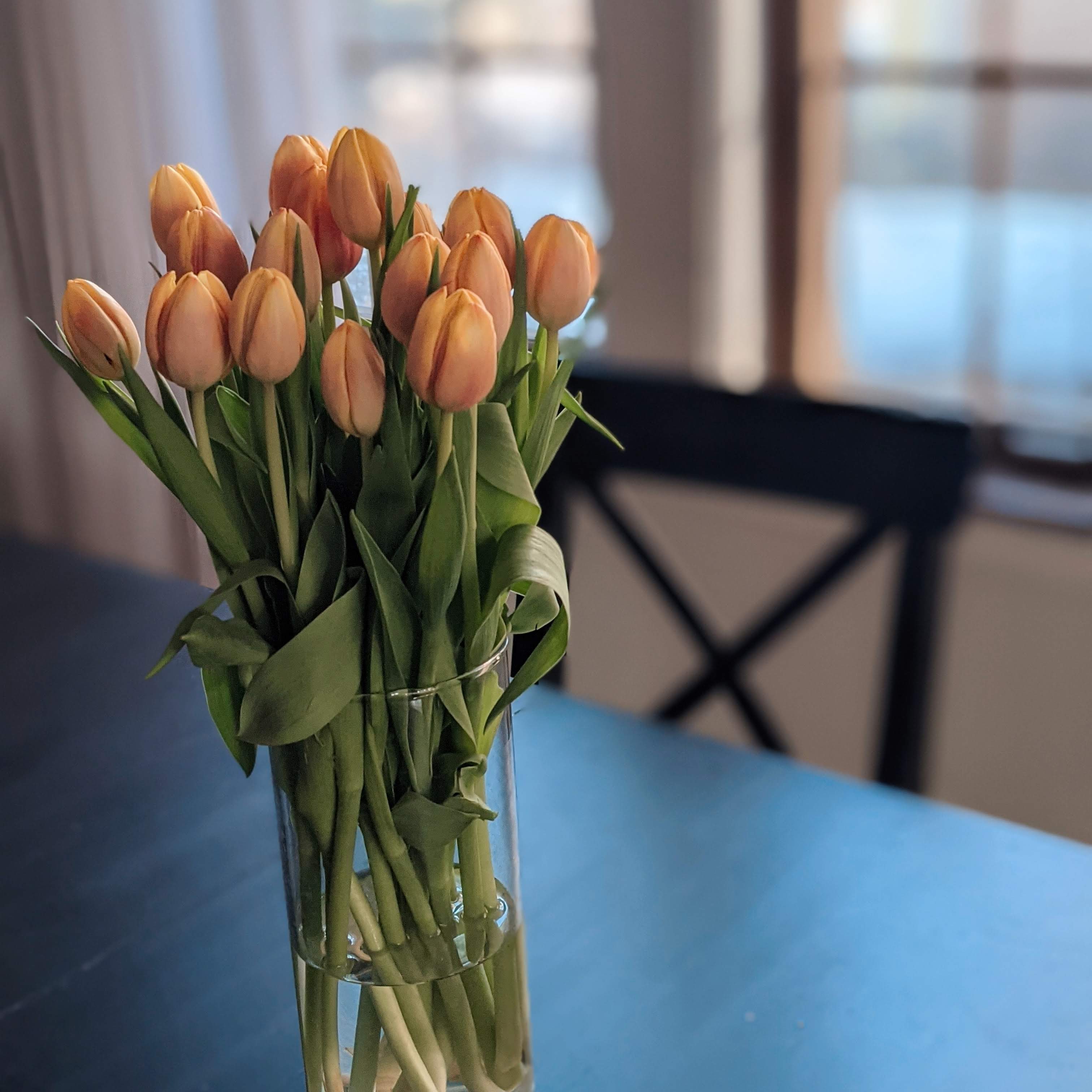
yellow tulips on your table,
mint chip in a sugar cone
from the corner creamery,
a lazy morning snuggling in bed with them,
new library books to devour —
relish their sweetness.
Move at your pace;
don’t let the rush
of hustle lure you
into the race again.
The truth? There is no race.
But there is one sun
around which we all orbit
searching for meaning
and love, and
aren’t you glad you made it this far?
Can you feel the thrill of spring rising?
Dare to dream again
make it bold
make it juicy
make it lavish with hope.
This is your
“one wild and precious life”
said the poet.
Now what will you do with it?
// inspired by Louise Erdrich’s “Advice to myself”; final quotation from Mary Oliver.
What flowers know
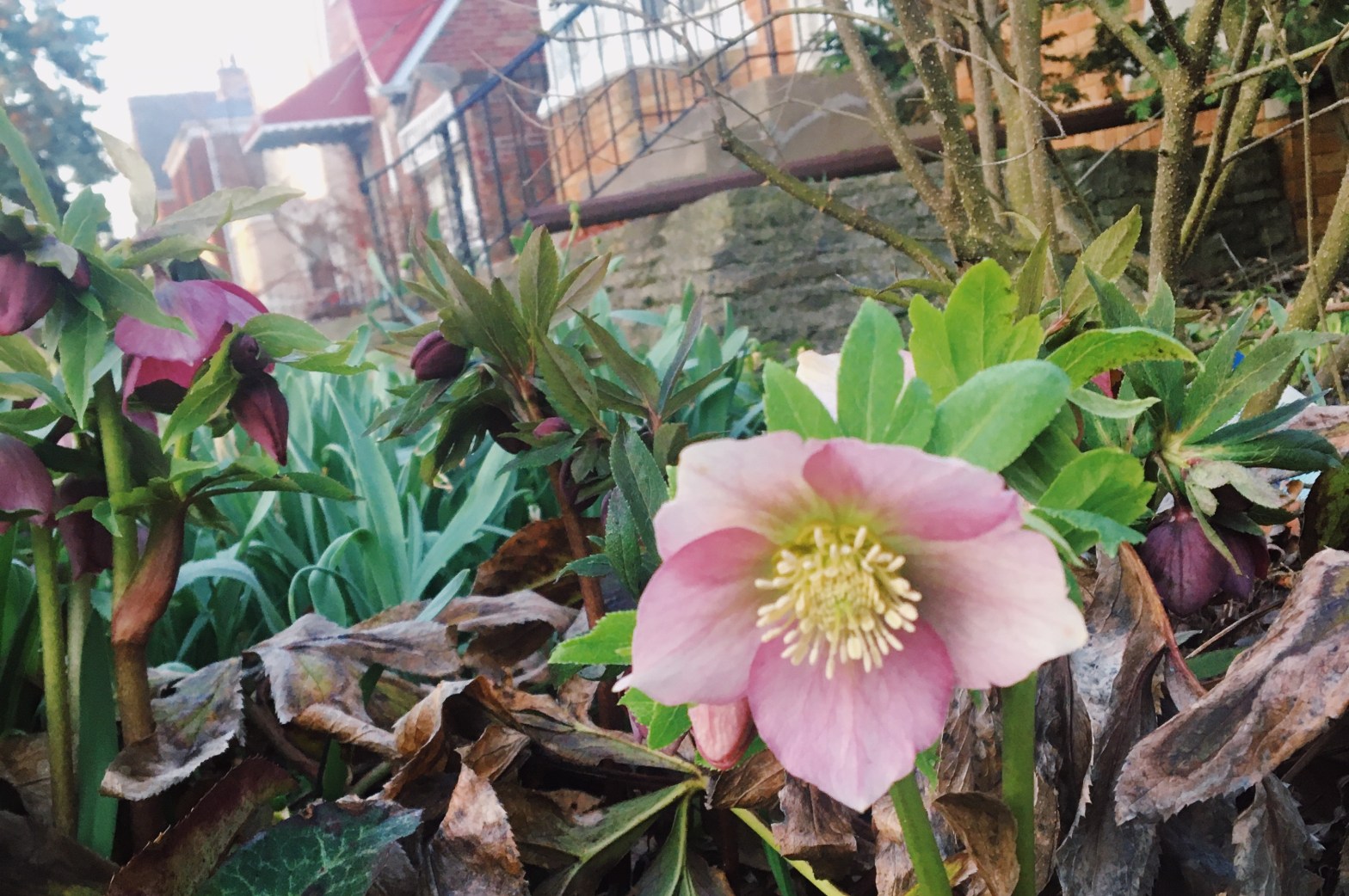
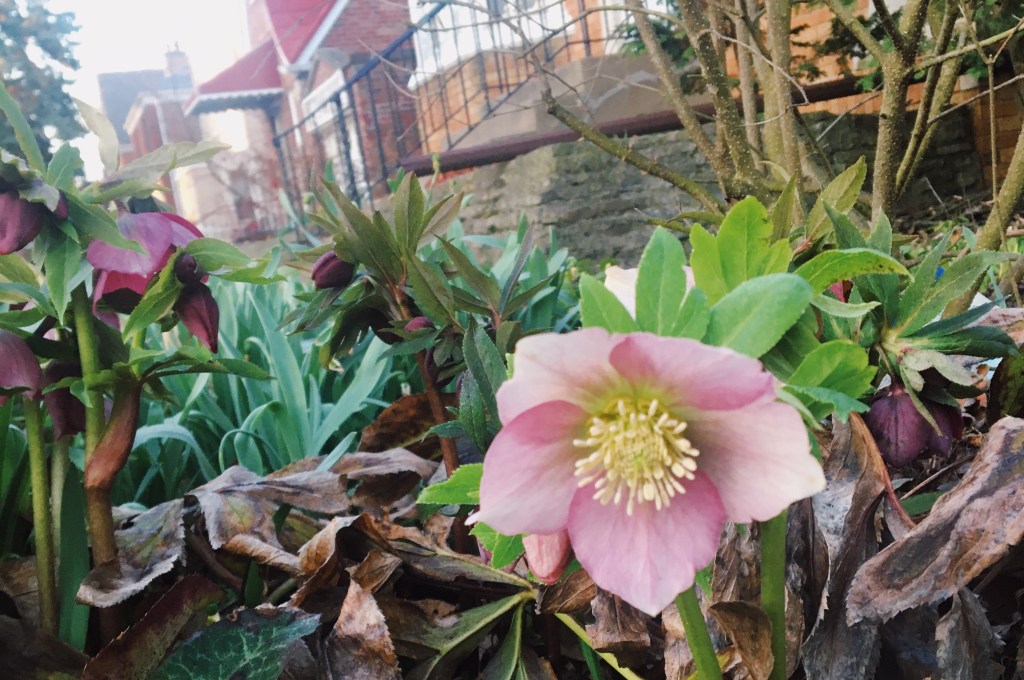
It snowed last Wednesday. Big wet clumps floated down, blanketing our hellebores, their full fuchsia faces turned up to the clouds as if to say, “Go ahead, test us.”
“Has it always snowed this much in April?” I asked Jay, glancing out the window, not waiting for an answer. “Seems like it’s snowing more than usual…”
Jay looked up from his excel spreadsheet — daily he’s been keeping track of the number of COVID-19 cases in Illinois, his means of coping — and shook his head. “It always snows in April, babe.”
“Yes I know, but I don’t remember this much!” I remarked, turning to protest. But Jay was already back in excel, consumed by the numbers.
The only thing I was tracking as of late was the view from our bay window — our flower beds, now decked in snow, the emptiness of the street, new buds poking out from our tree. So consumed was I with my busy life last spring I never stopped to notice the tree buds’ gentle unfurling.
I was noticing my son more too. He’s three, an age marked by darling utterances (“You are my best friend, Mommy!”) and searing attitude (“Mommy, you are being too loud!”). What a privilege to know the minutiae of his days. To see each breakthrough and breakdown. To watch him grow in slow motion. This is what I remind myself when my anger bubbles over. The federal money’s out and Jay’s small business loan application hasn’t been approved. People have been acting careless. Not enough has been done to protect front-line workers. Then there’s the widespread death and job loss. Feeling helpless.
Jay’s spreadsheet suggests we’re beginning to bend the curve. Yet I wonder, how long will this season last? And how can I taste sweetness alongside so much bitterness?
I considered the view from my window. The hellebores are a hardy perennial, no stranger to spring in the Windy City. I know how to face the winds of change, too. You root down, trust that light will return and keep blooming.
 Erin Strybis