What’s saving my life right now (or, some things that make this winter easier): 

{water} On Valentine’s Day, a pipe broke in our suburb causing our apartment complex and many other homes and businesses to lose access to clean water and plumbing.

This is embarrassing, but in my 39 years, I’ve rarely considered my dependence on water. It’s always been available. After using bottled water to brush teeth, wash hands, cook and more, plus coping with toilets that didn’t flush, I felt painfully aware of those privileges.

Cleaning up a particularly messy potty training incident without water made me crack. “That’s it, everyone,” I announced, surveying the damage. “I can’t take this anymore. I’m calling Grandma.” The kids cheered. Jay and I packed up our things and fled to my parents’ place in Chicago’s western suburbs to wait out the issue.

Meanwhile, an area hospital had to rely on bottled water and brought in temporary sinks to serve its patients. Other residents and businesses found ways to survive without running water. Everyone was humbled by this hurdle.

Two days later, the pipe was fixed and water was restored. Jay and I returned home to run faucets, clean toilets, change filters and empty out the icebox. We caught up on chores and laundry and, in the midst of our housework, we counted our blessings. Standing under my apartment showerhead, feeling hot, clean water rush over my shoulders, I practically cooed. The expression is true: Water is life.

{electric blanket} Each Christmas, my mother-in-law’s extended family hosts a white elephant gift exchange, and through a shrewd trade for a Hello Kitty mini fridge, we acquired an electric blanket. Though I’d never thought to buy one myself, this product is one I never knew I needed and this winter,  I can’t live without. My oldest fights me for it, but the biggest fan of the electric blanket, other than yours truly, is our pug, Gus, who at nine-years-old is becoming more and more like a cranky old man. Whether I’m warming my shoulders at my desk or snuggling underneath my electric blanket while watching TV, Gus is nearby, mooching valuable blanket real estate. I don’t mind sharing with him.

{screen boundaries} Recently, Jay and I banned our oldest from using his iPad on weekdays. Weekend use was fine, for an allotted time. But we were done with weekdays. “You guys are no fun,” Jack huffed. “Why are you doing this?”

I could see one of his iPad games having an addictive effect on him because I’d felt that same pull myself, but with checking Instagram and Facebook. This past January, I fasted from social media for a month. I’ve done this before, often in the summer. Though I missed connecting with my friends there, what surprised me most about this fast was how free I felt without these social platforms, which are designed to be addictive. My mind felt clearer, and I wanted that for Jack.

“Too much time playing [addictive game redacted] isn’t great for your brain, the same way too much time on Instagram isn’t great for mine,” I told him. 

Did this go over well? Absolutely not. Nevertheless, he’s accepted our new boundary and it’s helped his mood stabilize. Meanwhile, I’m dipping my toes back into social media, trying to find a boundary that works for me. For now, I’ll try Fridays only to connect with friends and share stories and photos. I hope our new boundaries will disrupt the addictive nature of our screens while allowing some room for fun.

{notebooks everywhere} Though I write a lot on my phone and computer, my preferred method remains by hand. Writing guru Natalie Goldberg instilled in me the virtues of writing by hand as a means to free one’s inner thoughts and it’s my go-to practice for early drafts and late revisions. Something about moving my hand helps quiet my inner critic (after many years working as a magazine editor, this is crucial to my process as a writer). So how do you write by hand when you’re a busy mom on the go? Stash notebooks everywhere. I have one in my car, one in the kitchen, one on my desk and one on my nightstand. Each is filled with journal entries, stories and lists. “Keep your hand moving,” Goldberg instructs in her book, The True Secret of Writing. “If you say you will write for ten minutes, twenty, an hour, keep your hand going. Not frantically, clutching the pen. But don’t stop. This is your chance to break through to the wild mind, to the way you really think, see, and feel, rather than how you think you should think, see, and feel.” There’s just something about writing by hand. A multitude of notebooks makes it possible.

{the children’s museum} After we moved to the suburbs, I left behind our beloved neighborhood filled with friends we’d known for years for a brand new place where we knew absolutely no one. Though we lost proximity to friends, what we gained was closer access to the local children’s museum. After I sprung for the annual pass, my youngest and I found ourselves there often, reveling in pretend play. When we visit, Adam fixes sandwiches at a restaurant, changes tires at an auto shop, paints a house, drives a train and more. It’s where we celebrated his third birthday, and where we meet up with his buddy from our old neighborhood. This is Adam’s happy place and I’m here for it.
{redwoods} Real talk: this winter, I’ve been moving through the anniversary of a traumatic experience. Some days are steady and even hopeful. Others are shaky and especially tender. 

One thing that helped?

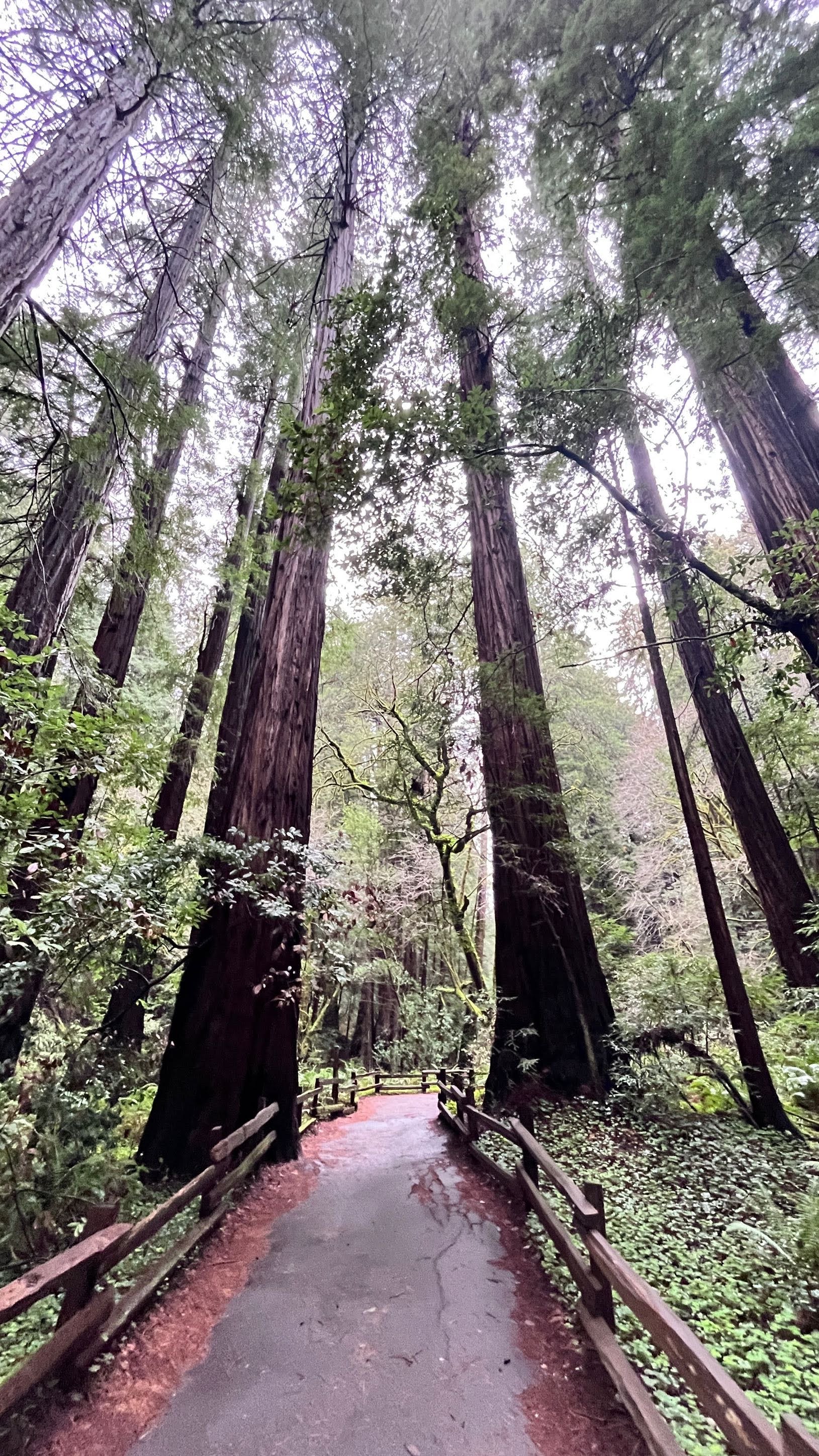
In early February, I traveled to San Francisco to spend time with my writing group. Fay, who lives in the Bay area, hosted. As part of our retreat, she drove us to Muir Woods, home of the ancient coast redwoods. I read in my brochure that redwoods have been in California for 150 million years, and those at Muir Woods are between 500 to 800 years old.

Entering the woods was like gaining access to a secret garden. 

Redwoods soared high. Emerald moss decked their reddish brown branches. Spring green ferns burst from the forest floor. Cool mist hovered around the woods, as if we were stepping inside a cloud. 

Fay, who has faced much adversity in the past year, paused on the path and gazed up at the towering trees. 

“You know, sometimes when I get discouraged by the news or my life, I think, whatever is happening out there, these redwoods have withstood it for hundreds of years, and they’ll still be standing afterwards,” she said. 

Spellbound, I nodded. Though we’d talked nonstop until this point, I’d run out of words. My brave and generous friend couldn’t have known how much her words meant to me. Here in this tree cathedral, I felt as if I’d received communion. I had a renewed sense that what had transpired last winter would not define me. Remember this moment, I thought. Remember her. 

I have thought of Fay’s wisdom a dozen times since we visited Muir Woods with our friends. The redwoods are still standing. We are, too.

// I wrote this post in collaboration with my writing group. To read more “What’s saving my life” lists, visit Kim’s post, Melissa’s post and Fay’s post.
Some Things You Never Forget

The first time you swam
you leaped into the pool,
trusted the strength of your arms and legs,
let the swell of water carry you forward,
triumphant in your magenta swimsuit.

The call that made you sink
to your knees in dread,
“Cancer,” the doctor said,
and your world stopped turning for an instant.

Your first big heartbreak —
dumped before senior year —
you thought he was “the one,”
he wanted to date around,
you ran all summer to ease the pain,
you grew beautiful and resilient.

Your wedding day —
facing your soulmate in the chapel,
warm, white light streaming down on you,
promising to love and cherish each other
until the day you die,
exchanging rings, kissing,
basking in his goodness.

Your first dog,
whom you’ll always adore,
how, as a puppy, he curled up
in your arms and looked into your eyes
and made you feel safe, known and loved.

The dog who bit you,
and drew blood.
You thought he was gentle,
you thought you could trust him,
but he was a wolf all along.

The one you called when you were in trouble,
who held you when you howled in pain,
who cleaned the wound,
kissed the scar
and healed you.

My body, a wonder

She used to race, Nikes flashing across worn asphalt, Lakefront wind slicing against her, heart pounding, flying free.

She swam, limbs threading Lake Michigan’s rough, cool waters, gulping air, rocketing herself forward, weightless. Back then, she measured her worth with numbers: pounds, pace, calories. Afraid of everything and nothing.

She once saved two men from drowning.

Nearly drowned herself in tears when she labored for hours, failing to deliver, landing in the OR, waiting with bated breath for her baby’s first whimper. For 20 months, she nourished his small body with her breasts.

Sometimes, I am astonished by her power.

Other times I’ve felt trapped by her, my body: too flat-too heavy-too blotchy-too lumpy. Wished I could shed her like a second skin, my body. The times she’s attracted honks, heckles, stares, touch without permission? Wished she wasn’t so dangerous, my body.

But there was also this: her standing in the dusty infield, mit held high, mit finding the ball again and again and whipping it through the air to the tune of cheers. “You’re out!”

She traded her cleats for tap shoes, dancing across the stage, singing and smiling. Oh how she danced — once at a swanky, smoky club in Madrid with seven levels, dressed in blue jeans, black top, very American, eyes laughing. She was thirsty for pleasure, and drank of it joyfully.

Shape-shifter, she’s spun and curved and stretched her limbs on the mat into a dog, a crow, a cobra.

She’s softer than she was last spring. New creases and curves grace her form, stubborn weight sits at her once taut middle.

Yesterday morning I took her for a walk in the neighborhood. The sun was out, and whirligigs sprinkled down from the Maple trees, twirling lazily in the sunshine, scattering across the pavement like confetti. She can twirl too, this soft, strong, aging body of mine. She still runs on occasion — mostly after her son. She is still afraid of everything and nothing.

She isn’t done changing. Not even close.

I wonder, what will she do next?

At home together (a tiny love story)

photo: Rachel Liv Photography

I.

The first notable thing about Jay was his hair: shockingly blonde and spiky.

The second: He was late to class on day one, strolling in during introductions. The only open seat was next to me, so he took it. His very presence shifted the air from stale to charged.

On our first date, we talked for hours about school, Greek life and growing up. He was my foil: analytical, relaxed, naturally gifted. Yet we worked. Being together felt like home.

II.

I spent the following semester in Cambridge, England. When a classmate’s boyfriend booked a flight to visit over Thanksgiving, Jay did too. 

Under the glow of fluorescent lights, I scanned the crowd at Heathrow Airport. Jay’s hair caught my eye first: blonde spikes gliding across arrivals. When he saw me, his gait quickened. He dropped his backpack and wrapped me in an embrace. A stream of travelers flowed around us, rushing to their destinations, but us? We’d arrived. 

We saw several sights that week. Yet the memory that stays is Heathrow — his hands around my waist, my head against his chest. Being held. 

III.

We are eight years married, with a home in Chicago. Over this pandemic, we’ve spent most of our time here with our son Jack, a preschooler. 

Recently, Jay left for his first work trip in nearly a year. Without him, these walls feel hollow.

One night over video chat, Jay reads Jack I’ll Love You Forever. After Jay closes the book, Jack circles his arms around the phone. Jay “hugs” him back, blowing kisses.

What is home? Not a place, but a feeling inside. It’s the joy that he brings when we’re wrapped in his love.

image: Phoenix Feathers Calligraphy

I wrote this post as part of a Blog Hop with Exhale — an online community of women pursuing creativity alongside motherhood, led by the writing team behind Coffee + Crumbs. Click here to read the next post in the “280 words” series.

Hungry for stories

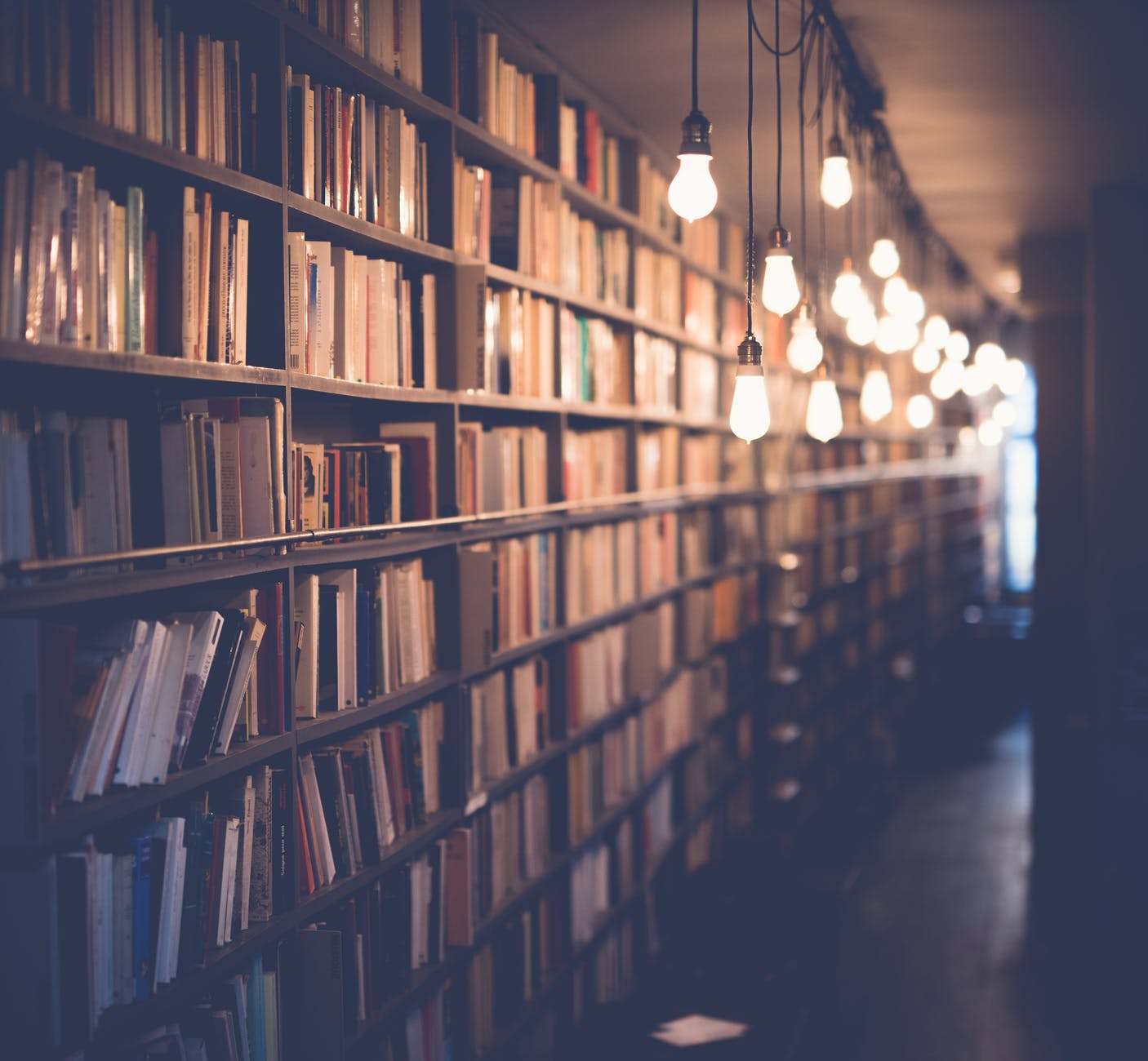
bookshelves
photo by Janko Ferlic on Pexels.com

The vent above the laundry room, located directly beneath my bedroom window, was the best spot in the house for reading. The natural light there could not be beat, plus it offered peak airflow. What I’d do is snuggle my back against the white dresser, position my bottom and feet over the vent slats, then prop across my thighs my latest book — in fourth grade, I was fond of the Little House series — and lose myself in the story.

When the Midwestern wind howled at our walls, I’d tent a fleece blanket over my body like a Snuggie and grasp the magic tome that transported me out of the suburbs and into the frontier with Laura and her pioneer family. We collected sap and made real maple syrup, churned butter, carried out the day’s chores and danced to Pa’s fiddle in their cozy cabin. I was fascinated with Laura’s life: there was always something to do or explore, people used their hands to make everything from meals to calico dresses, and new adventures awaited every season.

I read Laura Ingalls Wilder’s tales in the mid-90s, an era in which I played Oregon Trail on early model Macintoshes and ate McDonald’s Happy Meals regularly. I imagined pioneer times with a great fondness, perhaps because I never felt like I fit in much in my small world. We’d moved to Aurora, IL, from Clarksville, TN, when I was in second grade. By the time I arrived on the scene, it seemed everyone already had a friend group at McCarty Elementary. I’d left mine back in Clarksville.

Books became my closest companions, my security blanket, my transport away from the loneliness that ached inside me. A quick and early reader, I was voracious for stories. I visited The Met for the first time thanks to From the Mixed-Up Files of Mrs. Basil E. Frankweiler. I solved myriad mysteries alongside the Boxcar Children. I became obsessed with hieroglyphics due to The Egypt Game

Then I found a girl in the pages of A Wrinkle In Time whose sensitivity and longing to be liked matched mine. The passage “‘Why can’t I hide it, too?’ Meg said. ‘Why do I always have to show everything?’” roused tears of recognition.

There was so much to learn about the world – and myself – and I was discovering I could do it through stories. Each book I finished left me hungry for more.

Woosh. After the vent in my bedroom blasted hot air, my blanket would trap it, toasting my body long after the air shut off. Between the heat, the light and these stories, I wanted to grasp onto the warmth I felt and never let go. 

***

My first real job after college was at a large, progressive church on the Gold Coast of Chicago. I’d grown up in a church due to my mother’s work as music director and organist for Immanuel Lutheran; never had I ever imagined working for one. I’d studied English Literature with a minor in New Media Journalism and, as graduation loomed, I dreamed of becoming an editorial assistant at a fancy magazine in New York City. Maybe I’d work at one of my favorites, Self or Glamour. Or I’d become a cub reporter for a local newspaper before moving onto the Chicago Tribune. I’d worked all four years at our college newspaper and interned at a magazine senior year. I thought I had a fleeting chance at making it.

My career aspirations disappointed those who asked, “What are you going to do with an English major? Teach?” No, I had no intention of teaching. I wanted to write. 

Instead I found myself situated in the old servants’ quarters of Fourth Presbyterian Church of Chicago, copy editing bulletins. It was 2008, and the economy was in free fall. Unpaid internship opportunities beckoned, but I couldn’t afford to work for free. A chance job opening, passed on by a professor, led me to work here, at the intersection of Michigan Avenue and East Chestnut Street, where privileged shoppers met persons begging for coins, where rich and poor alike found solace from the city’s cacophony in the church’s gothic sanctuary. 

I would have missed this opportunity, were it not for Professor Ed Uehling. For the final required class for my major, I’d debated between a popular Children’s Literature course and Uehling’s course on Contemporary Literature. I chose his course, likely because it best suited my schedule. Thanks to him, I fell headfirst in love with the genre.

I feasted on Ian McEwan’s Saturday and Ann Patchett’s The Patron Saint of Liars. I savored Marilynne Robinson’s Gilead and Amy Tan’s The Bonesetter’s Daughter. The most delicious book on the syllabus was How the Garcia Girls Lost Their Accents by Julia Alvarez. Each of these authors were still alive and writing to the world in which we lived. The thought exhilarated me. 

Even with (or perhaps because of) the pressure of OMG-what-will-I-do-after-graduation building in my head, I dove into alternate realities and faced familiar truths in the pages of those books. I wrote the strongest papers of my college career and developed a good relationship with Uehling. When he suggested I consider the editorial assistant opening at the church, I applied. At that point, I was desperate for paid work.

“She has been too frightened to carry out any strategy, but now a road is opening up before her,” Julia wrote of Yolanda, one of the Garcia sisters. “She clasps her hands on her chest—she can feel her pounding heart—and nods.”

Like Yolanda, I wasn’t quite sure of the path I was taking, I only knew I had to be brave and embrace it.

Several months into the role, I stood in the church narthex, slipping stacks of sermon booklets into the literature racks. Hands full, I resisted the urge to question if I was wasting my time here. After all, everyone had to start somewhere, and why not start with a salaried job with benefits?

The task completed, I turned and took in the expanse of the sanctuary – rows upon rows of empty pews; its vast, vaulted ceiling; panes of jewel-toned light that streaked down from stained glass creating a mosaic on the floor. Come Sunday these pews would be full. I’d witnessed it myself a handful of times. Though I was already intimately familiar with the church’s inner workings, it never quite felt like home. Especially on a Sunday morning.

Sitting through an unfamiliar liturgy, I longed for the Lutheran hymns and prayers of my childhood. But I hadn’t yet found a congregation of my own.

Each week, as I reviewed Fourth’s “News and notes bulletin” for typos, every book club or Bible study posting spurred unexpected pangs of jealousy. Young and new to Chicago, I realized something: I wanted what these people had – community.

***

A couple years later I was at my desk in the church reading during my lunch break when I happened across an essay called “What To Know When You’re 25.” It left me breathless.

I was 24 at the time, and work at the church had grown stale. I couldn’t figure out how to move forward so I just stayed there. Even though all our friends were getting married, my college sweetheart hadn’t yet popped the question, and I didn’t dare push him. Furthermore, we still hadn’t found a church for ourselves in Chicago. 

I was drifting.

How had the writer of this essay stepped inside my consciousness and rendered it in words for all to see? I couldn’t fathom it.

I printed her advice in my planner: “Don’t get stuck. Move, travel, take a class, take a risk. Walk away, try something new. There is a season for wildness and a season for settledness, and this is neither. This season is about becoming.” 

That writer’s name was Shauna Niequist, and the essay was from her book, Bittersweet. I later purchased a copy and practically inhaled its contents. Afterwards, I knew I wanted to write like her someday. More than that, I wanted to live her stories — rich stories of marriage, motherhood, close friendships and deep faith.

I was hungry for those stories. Now I needed to seize them for myself.

***

It’s 7:30 p.m. and my husband is putting our preschooler to bed upstairs. In our basement I’ve set up my laptop on a box and I’m facing a Zoom grid of nine other women. We raise our glasses — some filled with wine, others tea and one whisky — to the screen and virtually toast our friend Ashley for her recent birthday. Due to COVID-19, we’re meeting remotely.

Ashley thanks us, then remarks that it’s been nearly 10 years since we started this book club. Shortly after I read Shauna’s essay, Ashley joined the staff of Fourth Presbyterian Church. We became fast friends, bonding over books and faith and staff happy hours. 

On one of our lunchtime walks around the track near Northwestern’s downtown campus, I told Ashley how much I admired Shauna’s cooking club that she writes about in Bittersweet. I always wanted to have my own small group like that, I said, but my group would meet to talk about books. Ashley agreed that it sounded lovely. 

As we turned back to the church offices, I grew bold. “Well, why don’t we start one?”

Ashley turned to me and gushed, “I love that idea!”

We decided she’d host, and we’d invite some coworkers and friends from college. Our first book would be Unbroken, a fascinating true story of a man’s resilience captured by Lauren Hillenbrand. It was Ashley’s favorite.

That first meeting was a great success, and thus, we kept our club going. Over the years, we read contemporary fiction and nonfiction, occasionally dipping into the classics or poetry. We most often read books by women — Ann Patchett, Sue Monk Kidd and Elizabeth Gilbert were favorites. The year I got married, Ashley and some of the book club girls attended my wedding. The year I started working at my dream job as an associate editor for a magazine, we read Roxane Gay’s Bad Feminist. On a cool spring night that sparkled with the joy of another dream realized, I hosted a foodie book club on Shauna’s Bread and Wine, complete with her mom’s blueberry crisp.

As some book club members inevitably moved away from the big city, we stayed in touch and kept recruiting new members. We’d celebrated engagements, weddings, promotions and new babies. We’d watched books we loved turned into movies and attended readings of favorite authors. My participation waxed and waned, especially the year I became a mother. Yet page after page, books brought us together. We created a beautiful story with each other in nearly 10 years.

Realizing I’ve been daydreaming, I redirect my attention to the computer screen. Tonight we’re discussing A Woman Is No Man by Etaf Rum, and one of our friends says she’s worried it promotes negative cultural stereotypes.

I disagree. This book covers domestic abuse and misogyny, I say, but it’s also about the unique strength of women. Though its heroine is isolated in her struggles, in the end, she derives courage to act from reading and from motherhood. The mothers in the group nod their heads in recognition. 

Conversation shifts to the next topic, and I think of a line of Etaf’s that drove straight through my heart: “It’s the loneliest people who love books the most.” 

I watch the smiling faces of each of my friends, some of whom moved years ago and are now tuning in for this special remote gathering, and offer a silent prayer of gratitude. Etaf’s words about loneliness may be true, but when bibliophiles come together, magic happens. In this time of COVID-19, while we cannot meet in person, when I long for nothing more than human connection, this feels especially significant.

“Reading her books, she was beginning to find a different kind of love,” Etaf later writes. “A love that came from inside her, one she felt when she was all alone, reading by the window. And through this love, she was beginning to believe, for the first time in her life, that maybe she was worthy after all.”

I smile and soak up the moment’s warmth, thankful for the young girl who loved books and the young woman who decided it was time to push her narrative forward. For the friends — in books and real life — who helped me see I am worthy.