
To have and to hold

erin and jay strybis
credit: Chris Ocken
And you have a person in your life whose hand
  you like to hold?
  “Yes, I do.”
It must surely, then, be very happy down there
  in your heart
  “Yes,” I said. “It is.” 
—Mary Oliver  

My husband Jay and I celebrate our sixth wedding anniversary on October 13. If you count dating, which I certainly do, we’ve been together over a dozen years. At first, after we married, it didn’t seem much different than dating. For six years we’d been serious about our love, on our wedding day we said vows to prove it. Marriage didn’t change much for us, at least not in that first year.

Our life circumstances have shifted significantly since 2012, the year we became husband and wife. After years of city living with minimal responsibility, we have a car loan, a dog, a mortgage and a baby (procured in that order). We officially crossed into the realm of “adulting,” and have oodles of paperwork to prove it. In recent years, we’ve taken to commiserating with one another, stating the obvious, “Being an adult is HARD!”  The hard stuff feels a little easier when you name it.

To that point: Hands down the past year has been the hardest year yet of our marriage. I thought this on our fifth wedding anniversary, the year our son was born, not knowing the challenges we’d encounter leading up to this anniversary. As new parents, we fought over diaper changes, the dishwasher and even dog food. We battled sleep deprivation and took turns caring for our son Jack when he got sick. There were many joyful moments too, like witnessing Jack’s first smile and his first shaky steps. Also figuring out how to date each other again (pro tip: finding a trustworthy babysitter helps). We were shocked by how hard parenting was, but at least we were doing it together.

This past year, however, showed me the meaning behind our vows, “for better, for worse, for richer, for poorer, in sickness and in health . . .” We faced the greatest obstacle of our life together when my husband got sick. This summer we lived in sickness, for worse and for poorer. We didn’t always live gracefully–in fact, I definitely didn’t live gracefully. Most of the time, I felt terrified and tired. I became intimate friends with anger, anxiety, fear and heartache. A lot of the time, I was parenting alone.

In the middle of the summer, I went on a five-day work trip to Houston, a brief escape from hardship. The trip couldn’t have happened at a more horrible time. Not only was Jay having a difficult health week, but our son managed to catch the dreaded hand, foot and mouth virus two nights before my flight out. Luckily, I’d arranged for my in-laws to visit and care for Jack. Low on sleep, I kissed my family goodbye and headed to the airport, feeling a mix of deep relief and nagging guilt. Ultimately the work trip was fun, and sleeping in my own bed for days, with no snoring or cries or worries to wake me, was heaven.

The last morning of my trip, I looked at myself in the mirror and struggled to hold back tears: I envied my former single self and all my single friends. I wanted to turn back time or fly home to a different life. I wanted to be free. I touched my face, then noticed my ring. My heart ached for my family too.

When I came home, I could barely contain my joy when I hugged and kissed my son and husband for the first time. Later on, snuggling my husband and our dog while they snored along in our cozy bed, I struggled to imagine my life without Jay. I’d spent much of the summer going over what-if scenarios regarding Jay’s health, pushing myself to be a caretaker, primary parent and provider even though it felt like I was barely holding on myself.

Holding my sweet husband that evening, I realized I didn’t have to. I could choose to thank God for each day we have together, rather than worry about the future. This outlook sustained me through the rest of the summer–and continues to be a guiding force in my life today.
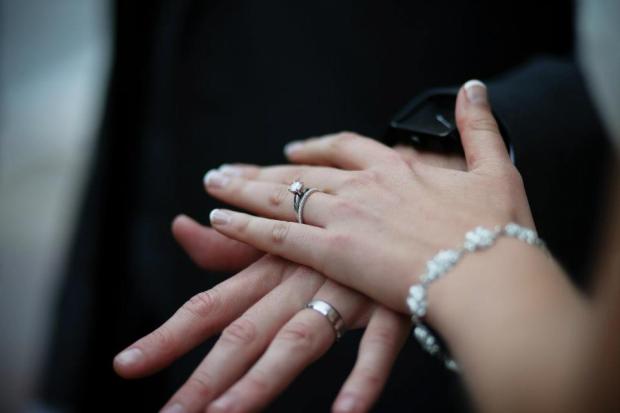
to have and to hold
credit: Mona Luan

Six years ago, on a rainy October day, Jay donned a slate gray tux and I wore cream-colored lace dress as we stood in our alma mater’s chapel and recited our wedding vows. We were–and are–surrounded by a crowd of witnesses who support our union.

That moment in the chapel is where marriage diverges from dating. As one year leads to the next, and life circumstances shift, living vows is not for the faint of heart. Here’s what I know: My husband and I faced great adversity in this past year of marriage and we are stronger for it. And now, as we enter into our next year of marriage, we’ll continue facing lows and highs.

I’m just glad we still get to do it together.

Husband of mine, I’m grateful for everything you do and are. I’m deeply grateful for your presence. Happy Anniversary, my love.

How I coped with weaning my son

Erin and Jack

About a month ago in August, after a three-day work trip to Boston, I stopped breastfeeding my son. He was 17 months old, and my husband and I thought this trip was a good opportunity to wean him.  Prior to the trip, he comfort nursed twice a day, in the mornings and evenings. I dropped to these two sessions when Jack turned one–I’d planned to stop when he simply lost interest.

Jack loved nursing, and I did too. Yet over time, it became clear those two feedings were affecting Jack’s sleep. Bedtime wasn’t so bad, but I knew Jack needed me to fall asleep. Mornings, on the other hand, were a challenge. Jack rose every morning at 5 a.m. crying out for me to feed him, a call I loved and hated. I loved starting the day with him. I hated the 5 a.m. part.

On one particularly exhausting morning last spring, I took Jack to back to our bed, positioned him the crook of my arm and elevated his his head, then fed him, blissfully, until we both fell asleep. This became our new routine, and it was something I savored. Early mornings became much easier, until Jack’s wake-up time started creeping from 5 to 4:45 to 4:30 to 4 a.m. By summer it was clear something had to change to remedy the situation.

For months I was so afraid of what was on the other side of weaning. Weaning marked the end of Jack’s babyhood, even though he’d dived into his toddler phase in February, when he took his first steps. Once Jack was weaned our relationship would inevitably shift. In August, it was time for that shift.

A difficult transition

Weaning, like breastfeeding, was surprisingly painful. Unlike breastfeeding, where the pain is raw and physical, the effects of weaning hit me squarely in my heart.

The night after I returned from Boston, I led Jack through his usual bedtime routine, skipping his feeding. He’d already experienced three nights like this; I hoped it would seem normal. Standing at the foot of the crib, I cradled Jack and sang him a lullaby, the final step in his routine. He wrestled and craned his neck toward my breasts. “Milk? Milk?” he asked sweetly. My heart dropped.

“Mommy doesn’t have any milk now,” I answered gently.

“Milk? Milk?” Jack asked again, and I shook my head no. He screamed violently. I tried to stay calm, but I could feel the panic rising inside my chest. I put Jack down in his crib; he went ballistic. I picked him up again, he tried to nurse, then cried, so I put him down again. He cried harder. I hated that I couldn’t soothe him with nursing. I worried: Did I wean him too soon? Soon I was crying too–big, heavy tears.

The noise woke my husband, who was asleep in the other room. “Erin, Erin, are you OK?” he called out sleepily. Jack cried. I cried. Jack cried some more.

“No,” I finally blurched. “Help me.” I was so overwhelmed, I wasn’t sure I could last any longer. I wanted to run far away from this baby, this choice, this heartache. I tried to hold Jack and rock him, but he continued to wrestle. On the verge of collapse, I felt my husband’s loving arms encircle my waist. He stood behind me and rocked me–and our son–in his arms. “Shhh” he whispered, urging both of us to relax.

Jack finally fell asleep that night, but I couldn’t. I tossed and turned, plagued with anxiety. I couldn’t stop turning over this choice in my head. Had I made a mistake?

I loved everything about breastfeeding my son: the soothing effect it had on him, the bond it created between us, the feel-good chemicals it created in my body, and heck, the calorie burn was a nice treat. Most of all, I loved that it was a way for Jack and me to start the day together, and to reconnect after a long day, usually spent apart at work and daycare. Now our special time together had ended, and I was full of sorrow and doubt.

Morning came. Some time between 4 and 5 a.m., Jack called “Mommy! Mommy!” I felt so depressed I couldn’t get out of bed. I roused Jay and asked him to take over. I couldn’t do this, it felt too damn painful. Jay helped my son with his morning routine that day. For Jack, that morning and the one that followed weren’t as painful. Morning nursing sessions were easily replaced with breakfast. He had some moments of frustration about the change, but they paled in comparison to what we saw at bedtime.

Bedtime, which was once so easy, became a war. Jack didn’t want to be rocked to sleep. He didn’t want to be patted to sleep. He didn’t understand why we were skipping his favorite part of bedtime, when he reconnected with his Mommy. He was frustrated–he longed for his old routine. I did too, but I knew it was too late to go back.

Some nights I cried, but other nights I got angry. Once I got so angry at Jack for refusing to lay down in his crib I stalked out of his room and slammed the door loudly. “I can’t go back in there,” I fumed. My husband roused himself from bed and finishing putting Jack down.

My whole body, especially my breasts, ached for Jack. My hormones were out of control. I was irritable and grouchy, and also weepy and sentimental. I mourned the change in my relationship with Jack. Would we ever be close again? I kept googling “weaning and depression” and only came up with a few helpful results. I read all of them. I texted my mom friends for advice. I called my mom. I wrote in my journal. I went to yoga.  I allowed myself to feel sad.

A week passed and one day, Jack slept until 6 a.m. When I looked at my phone I could barely believe it. Finally the early rising we’d grappled with for 17 months was righting itself. We had made the right decision after all, I thought, and my heart felt a little lighter.

A silver lining: Reclaiming my time

Jack’s sleep continued to improve, and so did our moods. We were getting along better, learning to connect in new ways. The breastfeeding hormones were leaving my body, and after about two weeks of sadness, anxiety and frustration, I began feeling like myself again. The only thing that hadn’t changed? My body kept rousing itself around 5 a.m. each morning.

I’ve always been a morning person, but after giving birth to my son that shifted due to his schedule and my sleep deprivation. Honestly my whole world shifted when Jack arrived and I never thought I’d be able to reclaim my mornings–until now. I used to get up early to workout, but I had a pretty established evening workout habit these days. What to do with this time?

One of my dear friends is a full-time working mama and prolific, accomplished writer. I’ve always admired how she prioritizes her writing amid her many responsibilities as a manager at work and mother at home. She told me her secret: getting up early a few times a week to fit in writing. When she shared this with me, Jack wasn’t yet one, and I knew it would be a long time until I could try this for myself. At August’s end, I had an epiphany: the time was now.

Thus I began reclaiming my mornings and rising early to write. Replacing something I loved so much–nursing Jack in the morning–with something I love that’s just for me–writing–has been amazing. It helped me let go of the final dregs of sadness about nursing Jack, and it’s helped me move forward in my writing goals. It’s been about a month since I started, and I’ve worked on a handful of writing projects–some to pitch to publications, some to share in this space and on Instagram, others just for me.

I worried I’d lose steam but I haven’t. It feels amazing setting aside this time for myself to do something I love most mornings during the workweek. It’s only an hour or so, but writing in the mornings before Jack’s awake, making time for myself first thing, sets the tone for my entire day. As many mothers know, feeding a child takes a lot of your time an energy, especially when your child is young and you’re on call about every two hours. Now that I’m finally on the other side of breastfeeding,  I’m so grateful Jack and I were able to share that special time together and I’m also delighted to finally reclaim my time for myself. This is a new beginning for me; these writing sessions are my silver lining.

Children grow so quickly–from exclusive breastfeeding to fruit and veggie purees to table foods to weaning, from crawling to toddling to walking to full-out running, from cooing to babbling to words to phrases–and each time Jack grows I continue to be amazed and surprised. Sometimes, like with weaning, the change is especially hard. Other times, like when Jack started talking, I was thrilled.

What I’ve learned from this is that it’s OK to mourn change even while you celebrate a new beginning. Looking back, I can barely believe I breastfed Jack for 17 months. I’m grateful was able to and I’m grateful we had that time together. Although weaning Jack was painful, he is sleeping better, is more independent and we’ve grown to connect in other ways.

Here’s to difficult goodbyes and new beginnings. May you find your silver lining.

Are you an early riser? Have you had a similar experience with reclaiming your time after a major life transition? I’d love to hear from you–message me or comment below.

Return to running

In my early twenties, I lived for running. In college, I jogged through campus and ran the backs of Cambridge while abroad. After graduating I ran 5ks, then half marathons and even triathlons. For three seasons, I was a girls running coach. I frequently ran the Chicago lakefront.

Then I stopped.

I stopped running consistently because I got pregnant with my son, and my morning sickness was horrible. I stopped calling myself a runner because I wasn’t—and even after I gave birth and was cleared to workout I only ran in fits and starts. Pregnancy was hard on my body; I wasn’t ready.

Now, as summer turns to autumn, I’m finding I’m craving running more than ever before. It was a hard summer, I’m ready to let go of all that’s passed and embrace the change in season. I’m ready for crisp, cool mornings and cozy sweaters, shorter days and longer nights, warm meals and pumpkin spice everything. And I’m ready to run.

Movement—whether running or yoga or other forms of exercise—has always kept me grounded. Returning to running has been like reconnecting with an old friend: my feet bound along the path, my heart warms, breath quickens, eyes open wide. As I run, I drink in the exquisite beauty of the world around me. This is why I love running. It makes me come alive.

Autumn has landed. Change is coming. What do you need to let go of? What do you need to hold onto or rediscover to stay grounded amid transition?

Everyone has a story

IMG_3505“Are you going to interview me now?” he asked expectantly. My colleague and I had just wrapped some video interviews at the church we were visiting, and had no intention of filming more. Yet I could see something in this man’s eyes—not desperation—an earnestness, a longing to be heard, that made me reconsider.

“Sure!” I said, motioning to a folding chair and pulling out my notebook. He had a problem with alcohol, he said, and he slept on park benches at night. But he’d been coming to the church soup kitchen for a while now, and he liked how it made him feel. I got the sense he was trying to turn his life around, like so many others I met that day.

I later described the encounter to others as “the ministry of interviewing.” What I meant is the act of listening deeply to someone share their life story meets the deep need we all share to be truly seen and truly heard. Listening—really listening—communicates, “You are worthy of attention. Your words matter. You matter.” Interviewing isn’t just about finding the perfect the soundbite or collecting information. It’s also about holding space for someone, exploring who they are and getting to the heart of their story.

I’ve spent more than ten years telling others’ powerful stories. It is an honor and a privilege I do not take lightly. What I’ve learned is that everyone has a story, everyone’s carrying a burden and there is something sacred about the ministry of an interview.
His story matters—and so does mine, and so does yours. Tell yours, and keep listening.

Loved, not abandoned

When the ones you love the hardest are suffering and you’re unable to stop it, it’s isolating and terrifying. The pain is sharp and heavy, almost unbearable. I felt like that yesterday.

But God showed up for me in a gifted bag of donuts from a new Cambodian friend; in holy conversation with an old friend in which I felt seen, heard and loved; and in this simple note stashed in my bag by a stranger: You are loved. The message arrived just when I needed it. It gave me hope.

What I’m beginning to realize is this: God does not abandon us in dark moments. God provides people and places and signs of love every day, we just have to notice them. God loves *you* dearly. And God’s love changes everything.

Spring cleaning

IMG_2845.jpg

Know what I realized lately? So much of the creative process (and life) is about getting out of your head and following your heart.

Noticing your inner critic—who says you can’t make anything original/you’re not talented/you don’t have a story to tell/you can’t finish that project/etc.—and flipping her script. Talking back, then moving ahead.

Wanna try it?

Repeat after me: I am original, creative and talented. I have a story to tell. I have something to say.

Be your own cheerleader. It’s that simple.

It’s time for some spring cleaning: Let go of the clutter and negative noise crowding up your head space. Replace it with something powerful and beautiful instead.

The world has enough angry voices shouting for our attention. How can you give yourself a little more love today?

The boy who lived

For so many—myself included—Mother’s Day is complicated. The day I became a mother was … complicated.

After hours of labor and an emergency C-section, I almost lost my son.

He wasn’t breathing when the doctor delivered him. I kept waiting to hear his cries, but all I heard was silence. Then nurses calling for backup. Then the medical team, trying to revive him.

I sobbed heavy tears, afraid I’d never meet my son.

Then he joined in, softly at first but gradually stronger. Relief, joy, awe — the sweet, sweet sound of my baby crying.

10 hours later – Cradling my son in my arms for the first time in the NICU took my breath away. Looking at his wrinkly, pink face and tiny hands, I nearly forgot I was sitting in a wheelchair, body aching from labor and surgery. Heart aching from the trauma, I held him close and thanked God for him.

This is motherhood: a forgetting of self, an outpouring of love, tremendous sacrifice punctuated by bursts of happiness. It is magical and terrifying. It is bittersweet.

Today I’m grateful for my mother and mother-in-law, for mom friends and family, for others who mother. I’m thinking of friends who grieve and suffer on this day. And I’m giving thanks for the boy who lived and made me a mother.

Fear and great love

“Here is the world. Beautiful and terrible things will happen. Don’t be afraid.” ―Frederick Buechner


If we were having coffee right now, I’d tell you the emotion I’ve been battling most lately is fear.

Fear is an uncomfortable emotion to harbor: Fear tells us we are weak and insignificant. Fear makes us believe are powerless. Fear can paralyze us from taking action, the very thing that can save us.

Until I went to therapy a few years ago I wasn’t emotionally aware enough to realize how often I felt scared. I think most of us are more fearful than we let on in our carefully captioned Instagram posts and casual conversations. Everyone’s afraid.

Lately the fear has been acute, like hunger pangs in my stomach I can’t seem to satisfy.

Maybe it was my recent discovery that I’m an enneagram type two, motivated by a deep need to love and be loved by others. (If you have not checked out this personality framework, do it now. It’s my new obsession.) This realization was terrifying and affirming and, like a true two, I immediately wondered what I could start or stop doing so that people would like me more (face palm). I’m afraid I can’t change or work around my weaknesses.

Maybe it’s because I haven’t had many writing “wins” lately and I’m feeling like an imposter. Sure, I’m an editor and I work with words every day. But to claim I’m a writer? Some days I’m not sure I have what it takes. There are so many writers out there who are more talented and have more interesting stories to tell. I’m afraid no one wants to hear what I have to say, that my work won’t be of service to others.

Maybe it’s because my son just turned one and it seems like yesterday we were taking him home from the hospital, nervous and excited. Sometimes I worry I’m missing out on his life, on raising him while I work full-time. I need to work to provide for our family, but I desperately crave more time with my son. What if I regret this choice later? I’m afraid of regret.

I’m afraid. I’m afraid. I’m afraid . . .

Last week on Valentine’s Day I was determined to shake off my anxiety and make this a special day for my family. We had heart-shaped pink pancakes for breakfast. Jack sent his grand and great-grandparents valentines. Jay got me the roses. It was a good day.

It was also Ash Wednesday, so I went to midday chapel. I received my ashes. I prayed.

Then I heard about the Parkland shooting. At first, I felt nothing. I was numb.

As the news rolled in, all I could think about was our son. I imagined him 15 years later, in high school. Jack the teenager cowering under a desk, fearing for his life. The baby I carried in my womb for nine months and nursed for a year shot dead in a hallway, blood splattering the floor. I thought of all the parents who woke up to this nightmare Wednesday afternoon. I thought of my mom an sister-in-law, both teachers. I sobbed and sobbed.

One of the worst parts of being a parent is realizing again and again that no matter how hard you try you cannot protect your child from everything. As any mom or dad will tell you, from the moment your child enters your life you will learn to live with the gut-wrenching fear that your precious son or daughter could die at any moment for any reason. Your child gets older, but it never gets easier. In our current cultural context, I think it’s only getting worse.

Places I have to worry about my son getting shot:

  1. Church
  2. School
  3. Mall
  4. Movie theater
  5. Concert
  6. Sporting event
  7. Airport
  8. Basically anywhere

We shouldn’t have to live with this. We shouldn’t have to die like this. And we definitely shouldn’t throw up our hands and say, “I guess since we all disagree on the root cause of gun violence in America, we should just do nothing. This problem is just too complex for us to solve.”

Fear continues to creep in and cripple us—and the very people we elected to protect us—from taking action to address this issue.

In her recent statement on the Parkland shooting, ELCA Presiding Bishop Elizabeth Eaton said, “We acknowledge our own failings and ask God to guide us in finding new ways to turn the tide together on both the availability of assault weapons and the lack of mental health care.

But we know that those things alone won’t solve this epidemic. All of us, including the church, must take a close look at ourselves. How are we cultivating a culture of violence, hatred, anger and fear, and how can we participate in building a counter-culture where people can experience God’s intended peace and life abundant for all?”

Amen! Yes, in the U.S. we have a serious culture issue at hand that’s playing a big rule in this mess we’re in. We glorify guns and violence in our media. We socialize our boys to suppress their emotions, to objectify women, to value “winning.” We play violent video games and watch violent movies. We stand idly by as others are bullied or isolated, too absorbed in our own lives, too afraid to show them compassion.

We are broken people. But my faith tells me that we can change. That the church—whose membership continues to be in decline, especially among younger generations—is relevant today because it offer tools for change. The church teaches a powerful, countercultural message of hope, healing, forgiveness and love all wrapped up in the story of Jesus.

I’m terrified of what we Americans have become. But I also have hope. God is calling us, as he always has, to love one another. What would it look like for us to let go of fear and live in great love instead?

Great love means seeking to listen and understand our neighbors before choosing sides. Great love means noticing our own complicity in the problem and resolving to change. Great love means honoring our neighbor’s emotions and stories. It means caring for everyone’s children–not just yours and mine. It also means: Reclaiming our schools and public spaces. Prioritizing people over weapons. Seeking common ground. Resolving our conflicts without violence. Prioritizing peace. Cultivating respect. Loving our neighbors as ourselves.

I’m outraged by the Parkland shooting. And I’m especially outraged because we know it won’t be the last. But we must do everything in our power to stop this senseless, savage violence in our schools and other public spaces. And although we aren’t all politicians or activists, we are all citizens and have an influence on our inner circles. Just look at the brave teens from Parkland who are working tirelessly to persuade our lawmakers to take action on gun control. Together we *can* affect change.

So here’s how I’m choosing to act: I’m choosing to raise my voice and shout, “Enough!” especially to our legislators. I’m choosing to get involved. I’m choosing to raise my son in a way that defies toxic masculinity. I’m choosing to keep praying, to vote conscientiously, to act conscientiously, and to look for the people around me who might need a little extra love.

I can choose to live life afraid. Or I can choose to live courageously in love.

I choose great love. What do you choose?

Highs, lows of 2017 + my 2018 intention

Strybis 36
Credit: Monamie Photography

Happy New Year! As I write this, I’m hiding out in my bedroom while my husband entertains our 11-month-old. I have my laptop, my coffee, a cozy blanket and snuggly dog, and I’m feeling especially grateful to be indoors on this chilly day in the city. It’s heavenly.

It’s been pretty quiet on this blog the past few months. Jay and I are on the other side of a particularly difficult parenting season. To keep things simple and maintain my sanity, I gave myself permission to take a writing break both professionally and personally during that season. In doing this, I was reminded of a valuable lesson: Sometimes, the only way to find inner peace is to let go of the expectations you set for yourself.

I missed writing. I missed this space.

I often found myself composing blog posts during my commute home only to arrive at my doorstep with an overtired baby, overtired mind and daily chores to complete. Once I had a free moment to myself, choosing to consume content versus create it was the easier course of action. After a difficult string of sleepless nights, I was reminded of my therapist’s advice to be gentle with myself. I stopped feeling guilty about getting lost in a good story or scrolling through my phone and just enjoyed it—particularly season two of The Crown, this YA novel, this bookthis podcast series and my fair share of Instagram stories.

In 2018, I want things to be different. I don’t want to stop reading and watching and listening and learning, but I do want to start creating and sharing more with all of you, friends. God has put a deep, burning desire to write on my heart–and I’m eager to lean into this passion and see where it leads me.

I won’t call this a resolution. By now, I know myself well enough to know I am not a resolution maker. (Frankly, the barrage of life and health and wellness challenges for the new year on social media this year is a bit overwhelming!) Instead, I’ll borrow from the yoga world, as I have done in the past years, and set an intention, a focus, going forward.

This my intention for 2018: to use this space and all the other channels available to me to tell my story, to create + connect with you. I intend to write and post more regularly, to not let fear, excuses, overwhelm and busy-ness get in the way of carving out a little space to reflect and share. The connect part is important to me too—this is my way to make my small corner of the Internet a more positive space, to find common ground with others, to keep in touch with friends, to inspire and encourage you on your journey. Speaking of which, I’ll start with some thoughts on the past year.

My year in review 

For me, 2017 was a year of change marked by the highest highs and lowest lows I’ve ever felt. The biggest change? Becoming a mother, which involved learning to get comfortable with change and challenges as our son moved through various stages of infancy. He’s on his way to becoming a toddler right now and I am amazed by the growth that happened right before our eyes. It seems like just yesterday we were bringing Jack home from the hospital, and now he’s on the verge of taking his very first steps.

As for highs and lows, here’s my list . . .

Highs: Giving birth to my son, breastfeeding and nurturing him, watching him grow and hit major milestones, growing closer with husband and other family members through parenthood, reuniting and connecting with Valpo friends, witnessing our goddaughter grow older, sharing in our godson’s baptism, getting back into yoga, publishing a couple essays, leading Living Lutheran‘s first theme issue, writing about Millennials and the church, sharing stories through this blog.

Lows: Processing postpartum trauma, transitioning back to work after maternity leave riddled with anxiety/heartache/doubt, vacillating from worry to disgust with the current U.S. administration, feeling lonely in our new neighborhood, struggling to keep up with work and home, dealing with my own newfound forgetfulness, receiving rejection emails, sleep-deprivation, illness, grieving the loss of innocents to more mass shootings, grieving the loss of two beloved grandfathers.

Undoubtedly this was the most challenging year of my life and my marriage. And it was also the most rewarding. Becoming a mother opened my eyes to the simple beauty and wonder of childhood and the deep joy and love of parenthood. It also pushed me to build greater resilience and grit.

Although I was at best an intermittent church-goer, I continued to pursue my faith in other ways, through reading and listening to podcasts and praying. I’ve prayed a lot more since becoming parent, and I’ve found the simple word, “help,” (of Ann Lamott’s “Help. Thanks. Wow.“) to be my particular Hail Mary in times of stress.

Our family lost two incredible men of faith this year–my Grandpa Joe and Grandpa Richard. Grandpa Joe was the strong silent type, but he loved baseball, square dancing with grandma, tending to his garden and going to church. Grandpa Rich, too, was an avid church-goer and he sung in the choir. He was incredibly outgoing, a good listener and a diehard St. Louis Cardinals fan. Both were dedicated husbands, fathers and, first and foremost, Lutherans. I really miss them both, but know they’re smiling down on us from heaven.

All in all I’m deeply grateful for the rich blessings God has bestowed on our family this past year, especially the gift of our son. That God entrusted this little wonder to our care never ceases to amaze me. Just today I found myself changing the diaper of my wild baby who would prefer to be naked wistfully wondering when the “real” adult/parent would step in and rescue me. While washing my hands, I looked at myself in the mirror and remembered, “Oh yeah, that’s… me. I’m the parent. I get to deal with this poop on my son’s leg. On my own. (Also, when did I start looking so tired? Have I looked like this all year?)”

This may sound trite, but the poop, the tears, the sleepless nights, the dogged tiredness, the doubt, the forgetfulness, the frustration, the annoying pump sessions… they’re all worth it. All it takes is a giggle, a smile, a snuggle, a hug from my son and my heart just melts. This joy, this love, this wonder–I never knew life could feel so full of brightness until I became a mother.

And that is what I’ll take with me from 2017. I’m leaving behind all the other icky stuff (I know, there was a lot of it) and remembering this: 2017 was the year I became a mother. It was the year Jay and I received the greatest gift of all, our son.

Help. Thanks. WOW.

Blessings to you in 2018.


Motherhood is messy

black and white splattersIt is 11 a.m. and I am laying on the floor of my newborn’s room, covered in a cold sweat. My teeth chatter as I wrap my oversized bathrobe tight around my body and watch my baby play. He is well but I am not. I am overtired and running a fever and the only thing keeping me awake in this particular moment is adrenaline. My lips move but my voice fails me as I let out a silent one-word prayer: “Help.”

That morning, on the floor of my son’s room, I experience my first panic attack. I am so sick I can barely care for myself and I am scared sick that I don’t  have the stamina to continue caring for my three-month-old son. To top it off my husband is out of town for a week-long work trip and it is only Wednesday.

Sick. Scared. Alone.

This is not how I pictured my first week of solo-parenting to go.

I am in the middle of my maternity leave but my husband is back at work and on the road. He is a consultant, so travel is a regular part of the gig. After Jack was born we’d spent six stressful/blissful weeks together learning how to care for an infant. Now I’m on my own and feeling terrible and I am terrified. I fight back tears as I call my husband and he immediately insists I call my mother and ask for help.

“Mom,” I croak when she answers the phone, “I need you right now. I’m sick and can’t take care of Jack. Can you come help me?”

“Of course,” she says, “I’ll come as soon as I can tonight.”

A fresh crop of tears spill from my eyes as I hang up the phone. My mom is coming to help. I am relieved. I just have to hang on until she can finish up at work and make the drive from Chicago suburbs to the city proper where we live.

Jack’s starting to get hungry so I pick him up and take him to the rocking chair. My head pounds as I hold him in my arms and feed him. His 11-pound body feels surprisingly heavy in my arms but I will myself to stay awake. In my head, I count the hours until my mother will arrive. Then I try to channel positive thoughts: I am strong. I can do hard things. I can do this.

FullSizeRender

There is something about motherhood that is incredibly physical, but we often fail to acknowledge it after our babies are born. Labor is taxing, yes, but long after children leave the safety of the womb, we continue to mother them with our bodies: our breasts a source of nourishment, arms a sanctuary place, sheer physical presence a comfort.

So what happens when mom gets sick? On this day when I feel like the walking dead, I draw a deep strength from within me and become a warrior. I get up, and I keep moving. I have to do this for my son.

Every day we sleep-deprived, exhausted mothers summon the power inside to persist, to endure hard things we’d never faced before we had children. We do it for them. We become stronger for our children.

Hours pass. When the doorbell finally rings, I rush to let my mom inside, holding Jack in my arms. When I open it I see my mom, arms full of a handful of bags and smiling at us and immediately I feel self conscious. My hair is dirty, my bathrobe sticky with sweat and I can’t remember if I’ve brushed my teeth. I am a mess, the house is a mess.

“Mom, you’re here!” I almost shout as I hand her the baby and take the bags she’s set gingerly on the ground. She’s brought Lipton soup and throat lozenges and ginger ale–all the things that she used to give me when I was sick as a child–and my heart just melts.

“I am so sorry but I just need to lie down right now…” I say, trailing off. “Are you OK watching Jack for a bit?”

“Of course.”

I retreat back to my room and flop down on the bed. My mom is here and I am safe and loved and so is Jack.

She rocks the baby, cleans the dishes and folds the laundry–she helps clean up my mess. She mothers me and my infant child.

I now understand what people meant when they told me becoming a parent is a lifetime commitment, because now that I’m a mom, I need my mom more than ever before and I’m so grateful to her for the ways she’s kept showing up in my life and mothering me, long after I left the nest.

Before becoming a mother, I had this idealized version of motherhood stuck in my head. I loved following The Bump’s instagram account and looking at perfectly stylized family portraits paired with witty captions. Motherhood seemed so fun and easy! And, certainly it is fun, especially seeing baby develop over time. Easy? Not so much.

What I’ve come to realize is that most days motherhood doesn’t look anything like the photos The Bump highlights.

Most days, motherhood is MESSY. And motherhood is about showing up amid the mess.

Motherhood on the internet is so often a performance, it’s putting our best foot forward for our friends and family and other strangers online. The images we love to share so often capture our parenting highs but don’t show the lows, the sick days, tears, tantrums or tremendous mounds of laundry and dishes waiting to be cleaned in the background.

Let me repeat: Motherhood is messy. In fact, as a default it’s messy and hard and infuriating at times, so why is everyone on the Internet so hellbent on making it seem otherwise?

Yes, motherhood is fun and rewarding and joyful, but it’s also: milk-stained shirts and dirty diapers and dishes piled up in the sink and three-day-old-hair and dark circles under your eyes and sometimes getting bailed out by your mom when you’re sick so you can just get some rest.

I have a request for all the mothers out there: Can we start talking more about this? About the messy stuff that happens in between our pretty family portraits? Can we honor mothers with more than words of gratitude in a card or Facebook post but with a heartfelt word of thanks for your incredible service, too?

Let’s stop pretending! Let’s embrace the joy and the beauty and the mess that comes with motherhood.

Maybe if we start talking more about how hard women work in the home, maybe our politicians will start working for women instead of against us (see: the war on women’s bodies, on women in the workplace, etc.).

Better yet, let’s just start electing more moms into office. Why? Because they understand what it takes to raise good citizens, they are experts at dealing with messes and also–they’re strong as hell.